Overview
If a dentist recommends a crown for a tooth one of the initial questions that people ask is “Is a dental crown painful?” It’s a common question particularly if you’ve never experienced restorative dentistry prior to. However, the advancements in dentistry, dental equipment and local anesthesia and non-invasive methods have made the process of putting on a dental crown much more relaxing than people think. During the procedure the tooth is prepared and then the custom-made crown is inserted over the damaged, weak or treated tooth in order to improve its appearance, strength and function.
What Is a Dental Crown?
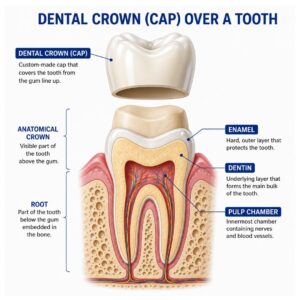
A dental crown is a custom-made “cap” that completely covers the visible portion of a damaged, decayed, weakened, or severely worn tooth above the gum line. It is designed to restore the tooth’s natural shape, size, strength, and appearance while protecting it from further damage. Once permanently placed, a dental crown helps restore normal chewing function, improves aesthetics, and supports the long-term health of the tooth.
The visible (anatomical) crown of a natural tooth consists of a hard outer layer of enamel, an underlying layer of dentin that forms most of the tooth’s structure, and an inner pulp chamber containing nerves and blood vessels. When the visible portion of a tooth becomes significantly damaged or weakened and cannot be predictably restored with a filling or other conservative treatment, a dental crown may be recommended to restore its function and protect it from further fracture.
Dental crowns are commonly made from durable materials, including:
- Porcelain
- Ceramic
- Zirconia
- Porcelain-fused-to-metal (PFM)
- Gold or other metal alloys
Your dentist will recommend the most appropriate crown material based on the location of the tooth, your bite, cosmetic goals, oral health, and functional needs.
Once placed and securely bonded to the prepared tooth, a dental crown functions much like a natural tooth. With proper care, it allows you to chew, speak, and smile comfortably while protecting the underlying tooth structure from further damage.
Why Might You Need a Dental Crown?
Dentists recommend dental crowns for several reasons. They are one of the most effective restorative treatments available for preserving natural teeth.
Common reasons include:
Protecting a Weak Tooth
A tooth weakened by extensive decay, fractures, or large fillings is more likely to break. A crown provides full coverage and helps prevent additional damage.
Restoring a Broken Tooth
Teeth that are cracked, chipped, or severely worn can often be restored with a crown, improving both function and appearance.
Following Root Canal Treatment
After a root canal, the tooth becomes more brittle because the infected pulp has been removed. A crown protects the tooth from future fractures.
Supporting Large Fillings
When too much natural tooth structure has been lost, a traditional filling may no longer provide enough support. A crown strengthens the remaining tooth.
Improving Cosmetic Appearance
Crowns can improve the appearance of severely discolored, misshapen, or worn teeth, creating a more natural-looking smile.
Replacing Missing Teeth
Dental crowns are also placed on dental implants and used as part of dental bridges to replace missing teeth.
Is a Dental Crown Painful?
The simple answer is no—getting a dental crown is generally not painful.
Most patients are surprised by how comfortable the procedure is. Before your dentist begins preparing the tooth, the area is thoroughly numbed with a local anesthetic. This prevents you from feeling pain during treatment.
Although you may notice pressure, vibration, or mild movement while the dentist reshapes your tooth, you should not experience sharp pain.
If you feel discomfort at any point, your dentist can administer additional anesthetic to keep you comfortable throughout the procedure.
Many people compare getting a dental crown to receiving a routine dental filling.
Why People Think Dental Crowns Are Painful
Dental anxiety often comes from misconceptions or previous dental experiences rather than the crown itself.
Common concerns include:
- Fear of dental injections
- Worry about tooth drilling
- Anxiety after hearing stories from others
- Existing tooth pain before treatment
In reality, many patients actually experience relief after receiving a dental crown because the damaged tooth is finally protected.
What Happens During a Dental Crown Procedure?
Knowing what happens during treatment can help reduce anxiety and make the experience more predictable.
Step 1: Examination and Diagnosis
Your dentist begins by examining your tooth and taking dental X-rays if necessary. This allows them to determine whether the tooth is healthy enough to support a crown or whether additional treatment, such as a root canal, is required.
Step 2: Local Anesthesia
Before any work begins, the treatment area is numbed using local anesthesia.
This step is one of the main reasons why the dental crown procedure is usually painless.
After the anesthetic takes effect, your tooth and surrounding tissues become numb, allowing the dentist to work comfortably.
Step 3: Tooth Preparation
The dentist carefully removes a small amount of enamel from the tooth to create enough space for the crown.
If the tooth has significant damage or decay, restorative material may be used to rebuild its foundation before the crown is placed.
During this stage, you may feel vibration from the dental instruments but not pain.
Step 4: Digital Scan or Dental Impression
Once the tooth is prepared, your dentist takes a precise digital scan or traditional impression.
These measurements are used by a dental laboratory to fabricate a custom crown that matches your natural teeth in color, shape, and bite.
Step 5: Temporary Crown Placement
Because permanent crowns usually require several days to manufacture, your dentist places a temporary crown to protect the prepared tooth.
You may notice mild sensitivity while wearing the temporary crown, but this is usually manageable and temporary.
Step 6: Permanent Crown Placement
At your follow-up appointment, the temporary crown is removed.
Your dentist checks the permanent crown for proper fit, appearance, and bite before bonding it securely to your tooth with dental cement.
Minor adjustments may be made to ensure your bite feels comfortable.
Once completed, your restored tooth should look and function like a natural tooth.
Does a Dental Crown Hurt After the Procedure?
Some temporary discomfort after getting a dental crown is completely normal.
Once the local anesthetic wears off, you may experience:
- Mild soreness around the gums
- Tooth sensitivity to hot or cold foods
- Tenderness while chewing
- Slight discomfort near the injection site
These symptoms are usually mild and improve within a few days.
If your crown was placed after a root canal, you may notice less sensitivity because the nerve inside the tooth has already been removed.
Persistent or severe pain is not considered normal and should be evaluated by your dentist, as it may indicate that the bite needs adjustment or another underlying issue requires attention.
Frequently Asked Questions
How long does a dental crown procedure take?
The dental crown procedure usually requires two appointments. The first visit, which includes examining the tooth, preparing it, and taking a digital scan or dental impression, typically takes 60 to 90 minutes. A temporary crown is placed while your permanent crown is fabricated. At the second appointment, usually 1–3 weeks later, the permanent crown is checked, adjusted if necessary, and securely bonded to the tooth. Some dental practices also offer same-day crowns using CAD/CAM technology, allowing the entire procedure to be completed in a single visit.
How long does a dental crown last?
With proper care, a dental crown typically lasts 10 to 15 years, although many crowns remain functional for 15 to 20 years or longer. Its lifespan depends on the crown material, oral hygiene, bite forces, and regular dental checkups. Avoiding habits such as teeth grinding, chewing ice, or biting hard objects can help extend the life of your crown.
Can I eat after getting a dental crown?
Yes, you can eat after getting a dental crown, but the timing depends on whether you have a temporary or permanent crown. Wait until the local anesthesia has completely worn off before eating to avoid accidentally biting your cheek, tongue, or lips. If you have a temporary crown, choose soft foods and avoid sticky, hard, or chewy foods until your permanent crown is placed. After receiving a permanent crown, follow your dentist’s instructions, and if a traditional dental cement was used, you may be advised to wait for a short period before eating.
Is a dental crown more painful than a filling?
No. For most patients, getting a dental crown is not more painful than receiving a routine dental filling. Both procedures are performed under local anesthesia, so you should not feel pain during treatment. Because a crown requires more tooth preparation, you may experience mild soreness or temporary sensitivity afterward, but this usually improves within a few days.
When should I call my dentist after getting a crown?
Contact your dentist if you experience severe or worsening pain, persistent sensitivity that lasts for several weeks, difficulty biting or chewing, a loose or broken crown, swelling, signs of infection, or if your bite feels uneven. While mild soreness and temporary sensitivity are normal after the procedure, these symptoms should be evaluated promptly to prevent further complications.